There is a place in Cameroon where the morning does not begin with the crow of a rooster, but with the echo of gunfire. Where children do not ask for toys—they ask if Daddy will come home tonight. Where the only “school” is a patch of mud under a rubber tree, and the only “hospital” is a neighbor who still has a few remaining tablets of paracetamol.
This is life in the war zones of the North-West and South-West regions of Cameroon.
Since 2016, separatist fighters and government forces have turned once-thriving farming communities into ghost towns. Villages like Muyuka, Kembong, Mamfe, and Ekondo Titi have been burned, abandoned, or turned into battlefields. Those who survive do not live—they hide.
They hide in bushes, in caves, in abandoned churches. They sleep on wet leaves with their babies wrapped in rags. They eat one meal every three days—if a kind farmer risks his life to share a few cassava roots. They watch their children’s bellies swell from hunger. They watch their elderly parents die from treatable malaria because the nearest health center was bombed six months ago.
And worst of all? They watch, helpless, as young men are dragged from their hiding spots and executed for the crime of being born in the wrong village.
This is not a crisis. This is a slow, silent massacre.
And we at FAPS-DEV refuse to stand by.
The separatist conflict has displaced over 700,000 people inside Cameroon. Thousands more have fled to Nigeria. But many remain—because they have nowhere to go, no money to travel, and no hope left.
Here is what we see every single day:
Hunger: Families surviving on wild roots and unsafe water. Malnutrition rates among children under five have tripled in war-affected zones.
No Healthcare: Separatists have burned clinics. Soldiers have occupied hospitals. Pregnant women give birth in ditches.
No Education: Over 600,000 children are out of school. Many have not seen a classroom in four years.
Death: Not just from bullets. From diarrhea. From pneumonia. From a simple cut that became infected because there was no antiseptic.
The international community has forgotten these people. The news cameras left years ago. The aid trucks cannot reach them because the roads are mined or controlled by armed groups.
So who will help?
We will. And we need you.
We have created a radical, sustainable, and deeply human solution. It is not a handout. It is not a food drop that lasts two weeks. It is a lifeline—a rope thrown to a drowning village.
Here is how it works:
We go into the bushes. We find the people who have not given up. The mother who still sings to her children even though she has not eaten in two days. The young man who builds makeshift shelters for widows. The father who walks 15 kilometers through enemy territory just to find clean water.
We select them not because they are lucky, but because they are resilient. We train them. We prepare them.
Each worker who finds a job agrees to contribute 5% of their monthly salary for 12 months after they are settled. This fund will sponsor the next person. Your one-time gift creates endless ripples of rescue.
We partner with legitimate recruitment agencies in Canada, Australia, Malta, Luxembourg, New Zealand, and Finland. We find them legal jobs—in agriculture, hospitality, construction, cleaning, caregiving.
They do not go as beggars. They go as heroes.
Every month, a portion of their salary comes home. Not to us—to their families hiding in the bushes.
That money buys:
Rice, beans, oil, and salt – so children stop eating dirt.
Malaria medicine and antibiotics – so a fever no longer means death.
Tarps and blankets – so a family can sleep without rain soaking their only clothes.
School fees for orphans – so the next generation does not grow up in darkness.
When they come home. Not as the same broken person who left, but as someone who has seen the world, earned money, and learned skills. They build small businesses. They pay school fees for their neighbors’ children. They become the village chief that everyone trusts.
One worker abroad can feed ten families at home. One returned worker can transform an entire village.
Let us show you what your support can achieve.
| Investment | Impact |
|---|---|
| $500 | Covers visa processing, medical exam, and pre-departure training for one worker |
| $1,500 | Sends one worker abroad with full support (airfare, permits, first month’s accommodation) |
| $5,000 | Supports five workers – feeding 50 families every month for two years |
| $15,000 | Launches a full cohort of 15 workers – transforming an entire village of 500+ people |
But the numbers do not capture the tears.
Let us tell you about Marie Ngoh. Marie is 34 years old. Her husband was killed in front of her in 2021. She ran into the bush with her three children, ages 6, 4, and 1. For two years, they hid. Her baby died of diarrhea because there was no clean water. Marie wanted to die too.
But she did not.
We found her. We trained her. We sent her to work as a cleaner in Malta.
Today, Marie sends back $200 every month. Her two surviving children are now living with her sister in a safer town. They eat three meals a day. They go to school. Marie calls them every Sunday.
She told us: “I am not a victim anymore. I am the one who saves.”
That is what this program does. It turns victims into saviors.
We have already selected 35 individuals from the worst-hit communities. They are waiting. They have their bags packed—literally. But we cannot send them without your help.
We are searching for agencies in Canada, Australia, Malta, Luxembourg, New Zealand, and Finland who will:
Accept FAPS-DEV as a recognized sending organization
Match our 35 candidates with vetted employers
Handle work permits and visa processing (we pay the costs)
Each worker costs approximately $1,500 to deploy (visa, medical, training, airfare, first-month housing). We are seeking:
Individual sponsors – Sponsor one worker for $1,500
Corporate sponsors – Sponsor a group of 5, 10, or 15 workers
Grant funding – To build a sustainable revolving fund (workers repay part of their salary to sponsor the next group)
The world has forgotten the people of the bushes. You can change that by sharing this page. By writing about them. By telling your friends, your church, your company.
A single share can save a life.
Every family you save, we will tell you their story.
We are not a large international NGO with helicopters and logos on TV. We are a small team of Cameroonians who refuse to let our people die in silence.
But we cannot do this alone.
Send a worker. Save a village. Break the cycle of war and hunger.
We know this is dangerous work. Here is how we keep everyone safe:
| Risk | Our Safeguard |
|---|---|
| Workers being exploited abroad | We only partner with agencies that comply with ethical recruitment standards (no worker-paid fees, legal contracts, passport retention allowed) |
| Families being attacked while workers are away | We relocate dependents to safer towns before the worker departs |
| Workers not sending money home | Workers sign a voluntary agreement; remittances are tracked through mobile money; community oversight ensures accountability |
| Accusations of human trafficking | FAPS-DEV is a legally recognized NGO (Prefectorial Decision No. 162/G.37/014/VOL/SAAP). All workers sign informed consent in their native language. We work only with government-approved agencies |
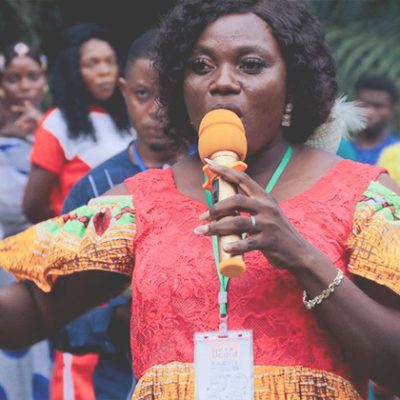
Founder & Executive Director
FAPS-DEV (Fighting Against Poverty for Sustainable Development.) was established out of a deep commitment to empower and uplift less privileged communities.
© 2025 Created Billa Charles Nde, FAPS-DEV (Fighting Against Poverty for Sustainable Development.)